New Online Shop www.thingzandstuff.com

Hi Everyone,

I have created a new online store for South Africa and there will also be a second one coming.

I am selling Books, Games, Toys, Beach Toys and Accessories, Gym Accessories, Pools & Inflatables, Party Accessories & Treats.

Come check us out at www.thingzandstuff.com


COULD MANIFESTING WITH PI BE THE NEXT BEST THING?


I wasn’t too sure about this whole “Pi Network” thing when I first got it on my phone almost two years ago, but I kept on mining and inviting people and now I have over 5200 Pi which is incredible. It’s as easy as...

Tapping my finger once a day to mine for Pi is all it takes.

What’s more, experts are saying the Pi coin could soon be worth $100 per coin.

$100 x 5100 Pi = $510000!

At the moment the project is in phase 2 and as soon as it hits phase 3 it will have a value. The more members we have, the higher the value. We know this from other coins and currencies being part of the supply and demand.

As most are aware, when Bitcoin got started it was worth 50c and is now hovering above $47 000.

Will you join me in this fun manifestation experiment? (It’s 100% Free. No Investment and nothing to lose!)

To claim your Pi, you’ll need an invitation code:


Invitation code: Heinpdvanzyl

Let’s manifest Pi, together.

Chat soon,

FAQ 1 - How much is Pi worth?
It’s no joke. Experts say Pi could exchange at $100 each in the near future.

FAQ 2 - Is Pi popular?
You bet it is. It’s huge and growing exponentially with a current count of over 23 million members.
(It grew by 5 million in the last few months alone)

FAQ 3 - What is Pi?
It’s a new digital currency developed by Stanford PhDs

FAQ 4 - Does it cost any money?
None.

FAQ 5 - How does it work?
You mine Pi on your phone. Literally, just once a day, you tap a single button. It’s that easy. If that sounds too good to be true, well, it might be. How I see it? Twenty Three million people here can’t be wrong and the great news is we have everything to gain and nothing to lose.

FAQ 6 - How do I get Pi?
Easy, follow the link below and use the invite code: Heinpdvanzyl


Here is a link to a guide and review regarding Pi Coin.


TRADING PSYCHOLOGY PART TWO OF TWO


Herewith part two.

Accepting Loss

The first reason why traders lose may seem obvious, but in reality it has it's roots in long-term social conditioning. This being our inability to accept loss. Loss generates a very strong and overwhelming set of emotions like fear, uncertainty, apprehension and self-doubt, especially among the men.

Men are socially conditioned to be successful from the moment they come into the world. Men are brought up to be the achievers and breadwinners. Driven by Family influence, friends, education and career environment, they are encouraged to seek professions as doctors, lawyers, and bankers.

Striving to be right, number one, the breadwinner, and the best, always seeking perfectionism. Men are socially conditioned to be family providers. Various cultural pressures and demands add up to this, and as a result men have an intrinsic fundamental obligation to succeed.

The solution is to take a reality check. Losing is part of the game. The chances that you could lose a trade is always there. Bottom line: traders do lose. The how much and how often is what separates great traders from those who will always find it challenging.

You can learn how to accept losses by re-defining the meaning of loss. If you equate it with failure, it will sooner or later take its toll, but re-defining it will help you move forward, improve your trades and help you to cope with possible losses.

Consider losing as positive in the sense that it will improve your future trades. Find something new. Make the mistake a blip on the radar, don’t over-react, and let it come and go with ease.

Locked Patterns

The second most important trading challenge is the innate human characteristic of patterns.

Here is an example of a trader with a locked-in pattern:

He keeps making the same mistake when trading. When asked to describe the mistake, he will do so in detail. When he is told not to repeat the same mistake again, he says he can’t help it. Although he intellectually knows he should stop making the mistake, he can’t. He keeps repeating it and as a result, repeats his losses over and over again, too.

· You go long and the market immediately goes down.
· You go short and the market immediately goes up.
· You start shaking, sweating and have shortness of breath.
· You are ready to throw your computer/laptop out the window and jump out yourself.
· And the market has only been open for 30 minutes.
· What is going on?
· You are in a trading psychology spiral.

Breaking a Pattern

· Getting up and moving is the fastest way to stop a pattern.
· Go for a walk and come back.
· Check if you followed your system.
· See if your system needs any improvements and apply them.
· Stick with your system and accept that days like this do happen.
· Trade smaller amounts until you make profits again.
· It’s important to avoid bad patterns at any cost. Do whatever it takes to break them.

How to Break a Pattern?

It is it is very important to note when the pattern is happening and to never let it take hold of you. Dealing with the loss as soon as it happens, will help you to achieve this.

If you have three trades that look exactly the same and they are all losing trades, it’s important that you make it a task to examine them and change your approach. If you don’t, the chances of you repeating it and losing the trades again will be extremely high.

And above all, never forget that a trader must do whatever it takes to stop.

Blocked Emotions

Finally, the biggest and most dangerous of the three problems is emotion.

When a trader gets over-emotional about a trade at any time, he can’t think clearly because emotions take control over his common sense. Emotions will cloud judgment, block clear thinking, and therefore prevent the trader from being creative. To sum up, emotions override logical thinking.

This is how you know you’re having an emotional block: you want to trade and also react in a certain way but you simply can’t, and even though you intellectually know what you want to do, you tend to react differently.

Locked Emotions

Our emotional strengths and peak mind-set are shaped by how and what we think. If we generate bad thoughts, they will affect the overall thinking process – but if we input positive thoughts, the output will also be good.

The best way to exclude emotions is to ask the mind a good question. Such questions force the mind to release emotion, as it shifts to finding the answer to that particular question. Also remember this: should you not be able to control what you are doing, the onset of a strong emotional block is likely. In such cases, you will need additional help to release it.

Reminiscences of a Stock Operator (1923)

In trading, your biggest enemy is within yourself. Success will only come when you have learned to control your emotions. Edwin Lefèvre’s Reminiscences of a Stock Operator (1923) offers advice that applies even today.

· Caution: Excitement, along with the fear of missing an opportunity, often drives us to enter the market before it is safe to do so. After a down trend a number of rallies may fail before we can carry eventually carry it through. Likewise, the emotional high of a profitable trade may blind us to see the trend reversal.

· Patience: Before you trade, wait for the right market conditions. At times, it is wise to stay out of the markets and observe it from the side-lines.

· Conviction: Have the courage to cling to your convictions. Take steps to protect your profits when you see that a trend is weakening, but sit tight and don’t let the fear of losing some of your profits cloud your judgment. There is a good chance the trend will resume its upward climb.

· Detachment: Concentrate on the technical aspects rather than the money. If your trades are technically correct, the profits will follow. Stay emotionally detached from the market. Avoid getting caught up in short-term excitement. Screen watching is a tell-tale sign: if you keep checking the prices or stare at charts for hours, it’s a clear sign of insecurity about your strategy and you are likely to suffer losses.

· Focus: Focus on the longer time frames and don’t try to catch every short-term fluctuation. The most profitable trades are in catching the large trends.

· Expect the unexpected: Investing involves dealing with probabilities, not certainties. No one can predict the market correctly all the time. Avoid the gambler’s logic.

· Average up, not down: If you increase your position when the price goes against you, you are likely to compound your losses. When the price starts to move, it tends to keep moving in that direction. Increase your exposure when the market proves you right and moves in your favor.

· Minimize your losses: Use stop-losses to protect your funds. Once the stop-loss is set, don’t hesitate but act immediately. The biggest mistake you can make is to hold on to a losing position and hope for recovery. The markets have a habit of declining way below what you anticipate. Eventually, you are forced to sell, decimating your capital.

Human nature being what it is, most traders and investors ignore these rules when they start out for the first time. It can be an expensive lesson, though.

Control your emotions and avoid being swept along with the crowd. Make consistent decisions based on sound technical analysis.

Be Cool

Markets change, new opportunities arise and the old ones fade away. Good traders are professional but humble people – this is why they keep learning. Speculators get paid for buying what nobody wants, when nobody wants it, and selling what everybody wants, when everybody wants it.

Remember that there is no such thing as a bad trader. On the contrary, there’s only well-trained traders or badly trained traders.

Conclusion

You will be more successful when you learn to control your emotions. These are strong words of advice first offered by trader Edwin Lefevre in his book entitled Reminiscences of a Stock Operator in 1923. This book is well worth a read to any trader.

Be cautious, be cool and be patient! Wait for the right conditions in the market before entering it. Sit tight when you are losing, do not let fear grip you, have courage in your convictions. Detach yourself from your emotions at that point and focus on your trading system. It would also help if you detach yourself from your computer screen! If you have placed your stop loss it is not necessary to be constantly watching the screen! This means that you are unsure of yourself.

Don’t be afraid to let go of a losing position. Do not add to a losing position! It is best to average up not down. So add on winning positions instead of on losing ones! New opportunities will always arise.

The bottom line is that having the right attitude and the right mind-set will make you more successful in trading!

TRADING PSYCHOLOGY PART ONE OF TWO

One of the most important components for successful trading is most definitely psychology. Psychology refers to the state of mind any salted trader should have while they are trading. 

Trader psychology deals with the following:
  • The control of a trader’s fears
  • The control of a trader’s greed
  • Trader’s discipline.
Why Do We Trade?

Trading is a very exciting activity but without the right mindset it can be extremely stressful. The problem then is that it is almost never possible to feel excited and make money at the same time! Think of a casino where amateurs celebrate over free drinks, while professional card counters coldly play game after game, folding most of the time and pressing their advantage when the card count gives them a slight edge over the house.

To be a successful trader, it is critical that you develop iron discipline.

Psychological Trading Issues and What Causes Them

Fear of being stopped out or fear of taking a loss: The most common reason for this is that traders fear losing too much and feel that they can’t take another loss. The trader’s ego is therefor at stake;

Getting out of trades too early: Anxiety plays a big role here and it is relieved by closing a position. Fear of trades turning and as a result, feeling let down. This ties in with the human need for instant gratification;

Adding on to a losing position (averaging down): Unwilling to admit that a trade is not correct and hoping that it will turn in your favor. Again, the ego is at stake here;

Wishing and hoping: Not wanting to take control or be responsible for the trade. Inability to accept the current market conditions;

Compulsive trading: Drawn to the excitement of the markets being in a favourable condition. Presence of addiction and gambling issues. Needing to feel you are in the game;

Excessive joy after a winning trade: Relating your self-worth to the markets. Feeling unrealistically “in control” of the markets;

Limiting profits: Feeling that you don’t deserve to be successful, to have money, or to make profits. Usually, psychological issues such as poor self-esteem;

Not following your proven trading system: you don’t really believe it works. You did not test it well. It doesn’t match your personality. You want more excitement in trading. You don’t trust your ability to choose a successful system;

Over-thinking your trade, second-guessing your trading signals: fear of loss or being wrong. Wanting a sure thing where sure things don’t exist. Not understanding the fact that loss is part of trading and the outcome of each trade is unknown. Not accepting the fact that trading imposes risks. Not accepting the unknown;

Not trading the correct position size: dreaming that the trade will only be profitable. Not fully recognizing the risk and not understanding the importance of money management. Refusing to take responsibility for managing your risk;

Trading in excess: need to conquer the market. Greed. Trying to get even with the market for a previous loss. The excitement of trading (similar to compulsive trading);

Being afraid to trade: no trading system in place. Not comfortable with risk and the unknown. Fear of total loss. Fear of ridicule. Need for control;

Irritable after the trading day: emotional roller coaster caused by anger, fear, and greed. Giving too much attention to trading results and not enough attention to the process itself and to learning the skills of trading. Focusing too much on money. Unrealistic trading expectations;

When trading with money you can’t afford to lose, or trading with borrowed money: last hope for success. Trying to be successful at something. Fear of losing your chance for the opportunity. No discipline. Greed. Desperation.

These are by no means all the psychological issues – but they are the most common. They usually center on the fact that, for one reason or another, the trader is not following his chosen trading approach or system but wings it, or trades his own emotions, which is a no go. As you see, psychology in trading is vital.

In terms of psychology, your goal is to be on an even keel, so to speak. Your winning and losing trades should not affect you. Of course, we all trade better when we win, but we should strive to maintain an emotional balance that is independent of any gains or losses.

In the next post, we will continue, starting with Accepting Losses

XM $30 FREE BONUS

Happy Friday to all and welcome to the first day of 2021.

I am reminding everyone that XM is still offering their $30 start up bonus and with the bonus you can definitely grow your profit if you take it slow at first while you learn.

I wish you all a blessed and abundant 2021!

WISHING EVERYONE A BLESSED AND ABUNDANT 2021

First off, I would like to thank all my followers who have helped me grow my blog into a small side business. It would not have been possible without your help.


2020 was a shocker of a year and probably the most insane time we have experienced in our lifetimes. We can still use whatever extra time we have due to lockdown etc. to learn a new skill and better our lives as a result. I used my time to learn to trade and to do social media marketing and it has been the best thing to achieve previously impossible goals.


2021 can be life changing if you choose it to be. The power is in your ability to focus on the goals and not look back on the past. I want to wish you all a happy new year and may you have a blessed and abundant 2021 filled with good health and wealth.


See you all next year! 

EARN BITCOIN WHILE BROWSING

Hi everyone. I do hope you all had a good Christmas.

2020 has been rough! One of the good things that happened this year the growth of the Bitcoin rate. That’s really cool and that made me think that I should share the link so you can take advantage of that and try CryptoTab Browser.

Use it like a regular browser and get benefits in BTC. Follow my link and see how easy it is to increase income. You can use it on your phone, tablet, pc and laptop and sync all these devices. They also offer an affiliate plan that helps you earn even more.

 Get Crypto Tab Browser


HOW TO OPEN AN ACCOUNT WITH XM BROKER

Greetings to all my followers.

I have to firstly apologize for being absent as long as I have been, but I have been having some health issues. Now that all is sorted, I thought a tutorial on how to register with XM Broker, would be a good way to start.

The first step would be to click on the image below which will take you to the XM website.


When you reach the site, click on the Green Button that says "START WITH $30 FREE".


This will take you to the registration page as shown below.


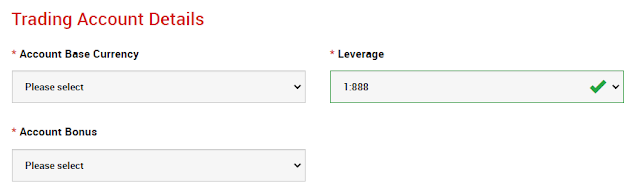
If you scroll further down this page, you will get to a section that says "Trading Account Details"

The first drop down list item, "Trading Platform Type", gives you 2 options. MT4 and MT5. The difference between the two is that MT5 includes Stocks and Shares as well as all instruments included with MT4.

MT4 is more than sufficient and you would be able to create MT5 accounts once registered anyway.
After that you will see "Account Type", which has a few options shown below.

In this instance, I would recommend Micro accounts for beginners. These accounts help beginners get a handle on trading and becoming used to the market volatility. This while they also learn basic risk management.

After this you can Agree to the terms and select the Green Button that says "PROCEED TO STEP 2"

This part of the registration is your Date of Birth, Address Details, Trading Account Details, Investor Information and Trading Experience Information.

Here is what you need to know about the last three sections.

1. Trading Account Details.


The Account Base Currency sections just gives a list of available currencies you can deposit in. Depending on where you are, this is all up to you. By default I will always just go for USD.

The Leverage section is not something everyone will understand immediately, but to be on the safe side as you learn to trade, choose 1:10 Leverage or lower. The higher the leverage ratio, the riskier the trades.

Then you will see the Account Bonus options. Select Yes, I wish to receive the bonus. This will give you access to the free $30 sign up bonus. I recommend reading the bonus terms and conditions because they have specific requirements for you to be able to cash out any profit you make.

2. Investor Information.

The "Investment Amount" option is basically how much you feel you are going to invest. Here, just go with the first option.

The "Intended Purpose and Nature of Transactions" is dependent on your trading style, but as a beginner, just select "Investment" or "Risk Management"

The rest are self explanatory and after this section, you will come to "Trading Knowledge & Experience"

This is your experience in trading and is also pretty straight forward. Each answer that you provide, will have a text box appear next to it that will give you some information on regarding your experience. If this seems a bit daunting at first, I would recommend creating a Demo account first before you trade for real. This will provide you the experience required to complete this section.

Then, select a password, tick the confirmation box and select the Green Button that says "OPEN A REAL ACCOUNT"

This will take you to a confirmation page which has the steps to take next.

From here, you need to check your email for a confirmation mail from XM. You will be required to confirm your account by clicking the button inside the email.


You will then receive another e-mail from XM broker that will contain Metatrader 4 account details as well as the server you would need to connect to on Metatrader 4.


Click the link to go to the members area and use the Account ID and your password to access this are.

You will be required to validate your account by entering additional information and uploading the correct documentation.

Now you are ready to start your trading journey. I wish you all the success you desire and may you have a blessed and abundant journey.